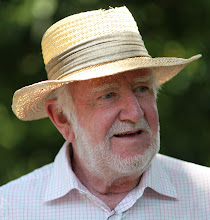
We chemical engineers are a privileged group. We are well grounded in chemistry, physics and math. We are used to handling complex systems and understanding the subtleties of their behaviour. We do our best to integrate environmental sustainability into our work. This may surprise those for whom the very word “chemical” is an anathema, but they do not understand the extent of the challenge posed by a cradle-to-grave system for dealing with chemicals. Once the chemicals get to the retail scale, it is extremely difficult to prevent environmental abuse.
Armed with the chemical engineer’s skill set, it is possible to take a unique view of climate change. First, it helps to define what we understand by “climate change”? The hypothesis is that an increase in the greenhouse gas concentration in the atmosphere will increase the scattering of longwave infrared which would otherwise radiate harmlessly into space. The resultant imbalance in radiative fluxes would lead to heating of the atmosphere. Both the increase in greenhouse gas concentrations and heating are observable, but it does not necessarily follow that the two are linked.
It is further supposed that the relative humidity will increase in a warmer world, and, because water vapour is a strong greenhouse gas, the rate of heating will increase exponentially. Intuitively, this makes sense. However, young chemical engineers soon learn that to every problem in a complex system there is always a simple straightforward solution – and that solution is always wrong!
The chemical engineer understands that feed forward disturbances in complex systems will indeed easily run out of control, and that there has to be feedback if the system is to be stable. The temperature control of the Earth is impressive. For any 100-year period during the past 8 000 years, the system has controlled itself within a range of ±2oC for more than 95% of the time. Climate science has been concentrating on the feed forward aspect, and seems to have completely neglected the stabilizing feedback mechanisms.
The world does appear to be warming. The official records claim to demonstrate this conclusively:
But there are a couple of problems with this official graph. If you take something like New York’s climate, and show the diurnal and seasonal changes, the official record looks insignificant:
That is “global warming”. Does it really look like a crisis? But worse is to come! Like a good chemical engineer, you check on the underlying data. You find, when you do this check, that the HADCRUT curve is a figment of someone’s imagination! The raw data has been “adjusted”. Cape Town’s data, for instance, shows slight cooling since 1880, but after adjustment the picture is dramatically different:
By ignoring the pre-1910 data and lowering the 1910 to 1960 data by exactly 1.21oC, the observed cooling has become a hypothetical warming! There are hundreds of sites to which similar “adjustments” have been made. A recent report observed “The conclusive findings of this research are that the three GAST [Global Average Surface Temperature] data sets are not a valid representation of reality.” HADCRUT is one of those three.
If you are a good chemical engineer, once your suspicions are aroused, you go very carefully. So when you are told “Extreme weather events, natural disasters and failure of climate change mitigation and adaptation” are high-ranking risks, you search for evidence in support. You go, for instance, to the climate bible, the Reports of the Intergovernmental Panel on Climate Change. There you find such warnings as:
• “There is low confidence that any observed long-term increases in tropical cyclone activity are robust
• “There is low confidence in observed trends in small-scale phenomena such as tornadoes and hail”
• “There is limited to medium evidence available to assess climate-driven observed changes in the magnitude and frequency of floods. Furthermore, there is low agreement in this evidence, and thus overall low confidence at the global scale regarding even the sign of these changes.” (Emphasis added)
• “Uncertainty in projections of changes in large-scale patterns of natural climate variability remains large.”
Now I ask you to imagine your Board’s reaction if you were to ask them for a few hundred million to address the risks posed by climate change, as assessed by the IPCC. You would probably be lucky to keep your job.
However, some Board members may have been reading Al Gore or similar science fiction. “What about the melting ice/sea level/ malaria/polar bears/coral?” And you would show them the evidence that the glaciers are only a few hundred years old – they come and go; that the sea level has been rising at about 1.7mm per year for as long as we have been able to measure it; or that, in 1923, malaria caused 10 000 deaths in Archangel, just outside the Arctic Circle; or that polar bear populations had been declining because too many hunting permits had been issued, and have since grown back; or that bleaching of corals is primarily due to short-term sea level changes such as those caused by El Nino.
They may fall back on the law. “We have signed the Paris Agreement!” But the Paris Agreement is about controlling temperatures, and that is something we chemical engineers know a lot about. The target is to control the Earth’s temperature to less than 1.5oC above some pre-industrial temperature. Look again at the first figure. The most recent data – which probably hasn’t been adjusted – shows a perfectly natural 0.6oC rise caused by El Nino. And our politicians are going to show us how to control to less than 1.5oC? Plus/minus how much?
But where we chemical engineers get really annoyed is when there are predictions about the future climate based on models. We do a lot of modelling. It is key to consistently producing chemicals of clearly defined properties from inputs of surprisingly variable composition. We maintain that quality in spite of plant disturbances, failed sensors, dramatic phase changes, ageing pumps. Our models work in real time.
The climate “models” fail. They all tell us the upper troposphere between the tropics should be warming faster than the surface of the earth. It isn’t. They can’t take into account the energy release of a single tropical cyclone, so their energy balance errs by a few zettajoules. We chemical engineers cringe at the amateur attempts to do modelling. If a model is demonstrably wrong, you should fix it before you go any further.
So what do they do with their failed models instead? They run them many times, and average the bad results. Then they use the average bad results to make predictions – invariably of worsening conditions. The extraordinary thing is that people believe them. Perhaps it is easier to create a putative problem than to rebuild a bridge or replace an ageing dam or heighten a sea wall.
Hans Andersen wrote a fable of the emperor’s non-existent new clothes. If Andersen were still alive, he would be amused to see his tale come true.
Saturday, April 14, 2018
Sunday, February 18, 2018
The worst website in the world?
When I started out in this computer game, I had to feed batches of punched cards into a mainframe. Fortunately there was a guide to the thing worked - it was an IBM manual. I used to hold out the manual as an example of how to write clearly, concisely and logically. Everything flowed naturally. The thoughts were beautifully expressed.
I used recipes as a counter example. "Take the peeled oranges" - huh? What peeled oranges? Oh yes, there were oranges in the list of ingredients, but you hadn't been asked to peel them, and at that point the recipe told you to watch the contents of the pot and keep stirring. Have you ever tried to peel an orange while stirring a pot full of frothing liquids which, you have been warned, is liable to boil over if you stop stirring for an instant?
There is a latter-day evil which has taken over from the recipe books. It is called a "website". Now there are websites which are things of great expertise. They work intuitively. You can find your way around them with never a glitch. You almost feel someone is holding your hand.
Then there are those for which I have an undying hatred. They lead you down the wrong path; they send you back to the start before you have really started; and they don't give you the information you need even when you get to where you thought you would be able to end.
I think the worst website in the world must be Ster Kinekor's. You would think that booking a cinema ticket would be the easiest thing in the world - they want you to buy something, and you want to buy it. But no! The first question you ask is "What's on?" and you get presented with a huge list. "Ahah! I'd like to see that!" you think, so you select it. You then try to choose your cinema. If you are fortunate, your chosen movie may be on at your chosen theatre - but it may not, and without further ado you are back at the "What's on?"
So you change your tactic. You choose a cinema first, and then ask "What's on?" You find a movie you want to see, and then try to find what time it is showing. Damn, it is only coming in two weeks. Back to the start.
Finally you find a movie you want to see, but the only time given is the time of its first showing. Surely there must be more than one time, you think. You flounder around and suddenly you are back at "What's on?" All the information you have given them is lost - you start again.
You want to know why the cinema nearest to you is closing? Look no further the the website.
I used recipes as a counter example. "Take the peeled oranges" - huh? What peeled oranges? Oh yes, there were oranges in the list of ingredients, but you hadn't been asked to peel them, and at that point the recipe told you to watch the contents of the pot and keep stirring. Have you ever tried to peel an orange while stirring a pot full of frothing liquids which, you have been warned, is liable to boil over if you stop stirring for an instant?
There is a latter-day evil which has taken over from the recipe books. It is called a "website". Now there are websites which are things of great expertise. They work intuitively. You can find your way around them with never a glitch. You almost feel someone is holding your hand.
Then there are those for which I have an undying hatred. They lead you down the wrong path; they send you back to the start before you have really started; and they don't give you the information you need even when you get to where you thought you would be able to end.
I think the worst website in the world must be Ster Kinekor's. You would think that booking a cinema ticket would be the easiest thing in the world - they want you to buy something, and you want to buy it. But no! The first question you ask is "What's on?" and you get presented with a huge list. "Ahah! I'd like to see that!" you think, so you select it. You then try to choose your cinema. If you are fortunate, your chosen movie may be on at your chosen theatre - but it may not, and without further ado you are back at the "What's on?"
So you change your tactic. You choose a cinema first, and then ask "What's on?" You find a movie you want to see, and then try to find what time it is showing. Damn, it is only coming in two weeks. Back to the start.
Finally you find a movie you want to see, but the only time given is the time of its first showing. Surely there must be more than one time, you think. You flounder around and suddenly you are back at "What's on?" All the information you have given them is lost - you start again.
You want to know why the cinema nearest to you is closing? Look no further the the website.
Monday, January 29, 2018
Land in South Africa
The ANC has raised the spectre of land restitution without compensation. Zimbabwe, here we come, has been the general reaction. So when UCT's Summer School offered a course "The land question in South Africa", I felt I had to go.
The course was led by Prof Ntsebeza of UCT's African Studies department. It started with a description of the problems faced by rural folk, who have tenuous tenure of their land courtesy the local Chief. Many of the Chiefs are from families that were granted chiefly status by the apartheid regime, to administer Government policy in their "Bantustan". When democratic government arrived, they moved seamlessly to similar status in the tribal authority adminstering the land. Not surprisingly, there is a level of resentment among those so administered, particularly as the tribal authorities show some of the characteristics of apartheid apparatchiks.
In the Eastern Cape, the King appointed Headmen to villages. The hierarchy is King, each of whom has 20 or more Chiefs reporting to him; each Chief has about 10 Headmen; and each Headman looks after one or more communities. But some communities, years ago, had elected their Headmen, and felt very aggrieved at having outsiders thrust upon them.
A community under the KwaGcina Traditional Council was so miffed that it took the Council and King to court when they refused to allow an election. The community won. The National Government, King and Council appealed - and lost. A Headman was duly elected.
This precedent looks like changing the political structures in rural areas. No longer can the government of the day rely on voter fodder being herded towards them by compliant Headmen. Indeed, the change has already spread so far that an imposed Chief has been rejected.
One of the problems of the tribal structures is that they are are supposed to work closely with local government. There is even a Co-operative Governance Act defining the relationship between the two. However, it is the cause of a real turf war, with local government being frustrated in its efforts at every turn. The end result is inevitable - rural dwellers have no effective service delivery, no schools,no clinics or hospitals, no transport systems.
Government is doing what it can to resolve the impasse, which is really of their own making. Originally land was to be a local government responsibility, but under presure from the traditional leaders, the ANC gave way and allowed the tribal authorities to continue their administration. There are signs that they are working to rectify this. For instance, in KwaZulu Natal, Government is threatening to remove the Ingonyama Trust of some 28 000 square kilometers from the control of King Zwelethini.
I came away from the course with a very different view of land reform in South Africa. I no longer believe the Zimbabwe example has any relevance. Rather, I believe we are seeing a democratisation of South Africa which will give us a stronger future, with the associated disappearance of the tribalism which has proved so divisive to our people.
The course was led by Prof Ntsebeza of UCT's African Studies department. It started with a description of the problems faced by rural folk, who have tenuous tenure of their land courtesy the local Chief. Many of the Chiefs are from families that were granted chiefly status by the apartheid regime, to administer Government policy in their "Bantustan". When democratic government arrived, they moved seamlessly to similar status in the tribal authority adminstering the land. Not surprisingly, there is a level of resentment among those so administered, particularly as the tribal authorities show some of the characteristics of apartheid apparatchiks.
In the Eastern Cape, the King appointed Headmen to villages. The hierarchy is King, each of whom has 20 or more Chiefs reporting to him; each Chief has about 10 Headmen; and each Headman looks after one or more communities. But some communities, years ago, had elected their Headmen, and felt very aggrieved at having outsiders thrust upon them.
A community under the KwaGcina Traditional Council was so miffed that it took the Council and King to court when they refused to allow an election. The community won. The National Government, King and Council appealed - and lost. A Headman was duly elected.
This precedent looks like changing the political structures in rural areas. No longer can the government of the day rely on voter fodder being herded towards them by compliant Headmen. Indeed, the change has already spread so far that an imposed Chief has been rejected.
One of the problems of the tribal structures is that they are are supposed to work closely with local government. There is even a Co-operative Governance Act defining the relationship between the two. However, it is the cause of a real turf war, with local government being frustrated in its efforts at every turn. The end result is inevitable - rural dwellers have no effective service delivery, no schools,no clinics or hospitals, no transport systems.
Government is doing what it can to resolve the impasse, which is really of their own making. Originally land was to be a local government responsibility, but under presure from the traditional leaders, the ANC gave way and allowed the tribal authorities to continue their administration. There are signs that they are working to rectify this. For instance, in KwaZulu Natal, Government is threatening to remove the Ingonyama Trust of some 28 000 square kilometers from the control of King Zwelethini.
I came away from the course with a very different view of land reform in South Africa. I no longer believe the Zimbabwe example has any relevance. Rather, I believe we are seeing a democratisation of South Africa which will give us a stronger future, with the associated disappearance of the tribalism which has proved so divisive to our people.
Labels:
Co-operative Governance,
democracy,
Land reform,
tribalism
Monday, January 15, 2018
Good, pure food
When I was a graduate student, I was allowed into the chemistry staff Tea Room. In those days, my degree had only just changed from Applied and Industrial Chemistry to Chemical Engineering, and we still had strong ties to the Chemistry Department.
In the tea room, there was lots of scientific reading matter. There were bound copies of journals, some in German, and some going back into the 19th century. One which fascinated me was "The Analyst", dating back to 1878 and still published by the Royal Society for Chemistry today.
Much of the early work had to do with the adulteration of food. There were ways of measuring the amount of chalk added to milk, or pigfat added to butter, or glycerine to wine. It was pretty horrifying what the Victorians came up with to enrich the butcher or grocer without killing the customer. Sweeney Todd was no joke!
Fast forward to today. I do quite a lot of cooking for myself, and rather enjoy it. A recent recipe for sauerkraut from the Economist has proven a great success, even if I had to visit the local spice emporium to find fennel. But I soon found there was something funny about chicken. When I cooked it, it oozed a white, unappetising goo. Then my supermarket had a special on Brazilian chicken, and when I cooked that, it didn't ooze.
Curious, I did a bit of digging, and found that the local chicken had "brine" added to it. Now brine is a colloquial word for salt water, and salt water doesn't contain goo. A bit more digging, and I found I was buying not just chicken, but chicken fattened and moisturized with chicken blood plasma in brine. So that was why it oozed and shrank.
Then I observed the same phenomenon in bacon. The commercial stuff was limpid and ended up half the size when cooked - if you were lucky. The German butcher sold me the real thing at a small fortune per kg, but it was firm and didn't ooze and shrink when you cooked it.
Soon I was finding ooze everywhere. The kipper that barely fitted into the pan, but looked like a sardine once it was done. The gammon that looked big enough for ten hungry mouths, yet had to be sliced very thin to celebrate Christmas.
I'm cross, and so should you be. Why do we allow ourselves to be ripped off in this way? To be sold something that contains about 30% that isn't what it claims to be? I see the poultry producers are complaining about unfair competition from imports. If they would stop adulterating our food, perhaps we might be more sympathetic.
In the tea room, there was lots of scientific reading matter. There were bound copies of journals, some in German, and some going back into the 19th century. One which fascinated me was "The Analyst", dating back to 1878 and still published by the Royal Society for Chemistry today.
Much of the early work had to do with the adulteration of food. There were ways of measuring the amount of chalk added to milk, or pigfat added to butter, or glycerine to wine. It was pretty horrifying what the Victorians came up with to enrich the butcher or grocer without killing the customer. Sweeney Todd was no joke!
Fast forward to today. I do quite a lot of cooking for myself, and rather enjoy it. A recent recipe for sauerkraut from the Economist has proven a great success, even if I had to visit the local spice emporium to find fennel. But I soon found there was something funny about chicken. When I cooked it, it oozed a white, unappetising goo. Then my supermarket had a special on Brazilian chicken, and when I cooked that, it didn't ooze.
Curious, I did a bit of digging, and found that the local chicken had "brine" added to it. Now brine is a colloquial word for salt water, and salt water doesn't contain goo. A bit more digging, and I found I was buying not just chicken, but chicken fattened and moisturized with chicken blood plasma in brine. So that was why it oozed and shrank.
Then I observed the same phenomenon in bacon. The commercial stuff was limpid and ended up half the size when cooked - if you were lucky. The German butcher sold me the real thing at a small fortune per kg, but it was firm and didn't ooze and shrink when you cooked it.
Soon I was finding ooze everywhere. The kipper that barely fitted into the pan, but looked like a sardine once it was done. The gammon that looked big enough for ten hungry mouths, yet had to be sliced very thin to celebrate Christmas.
I'm cross, and so should you be. Why do we allow ourselves to be ripped off in this way? To be sold something that contains about 30% that isn't what it claims to be? I see the poultry producers are complaining about unfair competition from imports. If they would stop adulterating our food, perhaps we might be more sympathetic.
Friday, December 1, 2017
There is no debate!
Three weeks ago I received an invitation from the National Science and Technology Forum -
Then the programme came out, and I wrote to the NSTF:
I cannot help but think that the NSTF needs to wake up. There are two sides to every debate. Presenting one and censoring the other isn't science.
Postscript:
About ten days after the above appeared, I had a very nice letter from the NSTF. Most apologetic that my presentation had been overlooked, but it was posted now. Perhaps all is not lost!
Show us the evidence for climate change
17 November 2017, Kempton Park, Gauteng
The National Science and Technology Forum (NSTF
) is pleased to announce that Professors Bob and Mary Scholes will present on climate change. This is an interactive discussion on this critical matter.I thought the opportunity to take part on an "interactive discussion" was too good to miss, so I registered for the event.
"I see from the programme that only 20 minutes is set aside for discussion, which after 80 minutes of presentation seems rather unbalanced.Would it be possible to prebook five minutes of that time? I have a very short presentation covering four of the issues that I believe the presenters will cover – and if they don’t cover one of them, I can easily drop that from my presentation."
There was a lot of scuttling around, and finally "Yes, we will make it possible"
In the event, it turned out that the occasion was the Annual General Meeting of the NSTF, and Bob Scholes was effectively the guest speaker. He gave what I would call the orthodox version of the climate change story. There were some very contentious bits - for instance, he believed the dendrothermometry behind the Hockey Stick, claiming that the author, Michael Mann, had been exonerated by eight separate hearings. The fact that Steve McIntyre had shown conclusively that Mann's maths was wrong, and gave hockey sticks from random data, was ignored. Mann's "trick", of deleting the inconvenient data showing tree rings narrowing as the world warmed, was omitted.
The lecture was about an hour long. Finally, then, there was to be discussion. There were a few questions, and when those slowed to naught, I was permitted to make my contribution. Scholes was allowed to respond and concentrated on the effect of 0.8 deg C warming - "The world was only 5 degrees colder at the depths of the Ice Age". - which surprised me. One ice core I know well, was several degrees warmer than today during the previous interglacial, and 10 deg C colder 20 000 years ago.
Over lunch, all the people at my table thanked me for my contribution. They felt it had been balanced, and showed that there was more to the orthodox view than they had been led to believe.
Two weeks went by, and there was a "Media Release":
and discussion can be found on the NSTF web site (www.nstf.org.za). Please send information and comments to enquiries@nstf.co.za."
In hope I went to the website http://www.nstf.org.za/discussion-forum/climate-change-and-evidence-2/, and found Scholes' story there, and nothing else. Of my presentation, no sign.
I wrote to the NSTF - "I distinctly recall making a presentation, but I cannot find it on the website. When will it appear?" To date I have had no response.
Clearly what I had to say must have been very subversive. You can view it via:
I cannot help but think that the NSTF needs to wake up. There are two sides to every debate. Presenting one and censoring the other isn't science.
Postscript:
About ten days after the above appeared, I had a very nice letter from the NSTF. Most apologetic that my presentation had been overlooked, but it was posted now. Perhaps all is not lost!
Labels:
Bob Scholes,
climate change,
Climate sceptics,
NSTF
Sunday, October 1, 2017
Zeitz Mocaa
I am not an art freak. Nevertheless, the transformation of a 1920's grain silo into a modern art gallery sounded sufficiently unusual to deserve at least a visit.
I still had qualms. To my eyes, too much of what passes as "African Art" is naive at best, childish at worst. Would this have any level of sophistication?
I should not have worried. I entered a very ordinary loading platform, complete with rails still on the floor. A metre or so inside, and I was in a cathedral of a space, with the old silos sliced in graceful curves.
Image courtesy Zeitz Mocaa
Overhead was a glass roof; some of the silo remnants were dangling threateningly; some housed spiral staircases, and others, lifts. I took a lift to the sixth floor, and stepped out into a sculpture garden. Stepping was gingerish at first, because I was walking on the glass roof, and very aware of six floors of drop beneath my feet. My head told me it was perfectly safe; the pit of my stomach told me quite the reverse!
There followed three hours of visual stimulation. Round a circuit of cubical galleries, some containing no more than a small picture on each wall, then down a floor. There was a wonderful triptych involving a zebra, by Athi-Patra Ruga - a great example of the technique of using high-definition ink-jet printing. Kudzanai Chiurai was prolific; his protest posters were a hoot, and his Lyeza film explored a sort of Last Supper theme very creatively. Nandipha Mntambo did magical things with cow hides - some of her creations could have graced grand balls. Mary Sibande's Opportunity was superbly sculpted, with a charging horse to end all charges. It did not matter that a room full of hanging bricks (Kendall Geers) and another of hanging beer bottles (Lungiswa Gquanta) were trite, or that Penny Siopsis had a whole wall which would have been better covered by graffiti - there was enough creativity elsewhere to take away the bad taste. Towards the end, William Kentridge's Dance was 12 minutes of sheer bliss - a vast panorama covering three walls, inviting total immersion and succeeding brilliantly.
The Zeitz Museum of Contemporary African Art is a fantastic addition to the list of Cape Town's attractions. Don't miss it!
Tuesday, June 13, 2017
How green WAS my valley!
We are all "green." We love nature. We will do all we can to save it from being ravaged by mankind. But there is a problem. As Einstein remarked “Raffiniert ist der Herr Gott, aber boshaft ist er nicht,” roughly translated as "The Good Lord may be subtle, but He is not malicious."
This should be a warning that you must at all costs avoid being what I call a "galloping green." There is no point in plunging ahead when you think you have spotted a problem. Just remember, there is always a simple, straightforward solution to virtually every problem, and that solution is invariably wrong. You have to think before you act. Gut feeling for nature could do damage, not solve the problem!
There is a wonderful example in the latest Nature journal, http://www.nature.com/news/gridlock-over-italy-s-olive-tree-deaths-starts-to-ease-1.19939. Down in Puglia, the heel of the boot which is Italy, some olive trees started dying. The plant pathologists identified a foreign bacterium, Xylella fastidiosa, as the culprit. They recommended uprooting the infected trees and everything within 100m of it.
But the local green movement was against this. They "knew" all about diseases of olive trees, and were not going to allow 1 000 year old specimens to be uprooted. They chained themselves to the infected trees to prevent them being taken down; they went to court to stop the "massacre." They convinced the Puglian judge that the problem was fungal, not bacterial, and that they were expert in handling olive trees attacked by fungi. The judge believed them.
And so the problem has spread through the whole of Puglia, some 200 000ha of olive groves, and is moving steadily north. It has taken six months, but the judgement has been reversed - probably not too late to save the rest of Italy's crop.
But Puglia is doomed, dead trees everywhere. And the bacterium seems to have spread - to coastal Spain, across the Adriatic to Greece. All because the tree huggers thought they had the answer. Sometimes one thinks green is the colour beloved by the Devil himself!
The pseudo-disaster of dropping the Paris Accord
There has been an outcry over the American decision to renege on the Paris Accord. Indeed, one professor went so far as to describe it as a “deeply immoral reprehensible act.”
Yet no-one who read President Trump’s speech can have been left in any doubt that there were sound economic reasons behind his decision. “Compliance with the terms of the Paris Accord and the onerous energy restrictions it has placed on the United States could cost America as much as 2.7 million lost jobs by 2025 according to the National Economic Research Associates. This includes 440,000 fewer manufacturing jobs. . .” “the Paris Accord … includes yet another scheme to redistribute wealth out of the United States through the so-called Green Climate Fund — nice name — which calls for developed countries to send $100 billion to developing countries all on top of America’s existing and massive foreign aid payments.”
When you realize that China is America’s greatest trading rival as well as being a ‘developing country’, you can understand the American reluctance to send it aid.
The good Professor even suggested America could not “opt out of the laws of physics.” Again, it is clear that he is ignoring large sections of what President Trump actually said. “Even if the Paris Agreement were implemented in full, with total compliance from all nations, it is estimated it would only produce a two-tenths of one degree Celsius reduction in global temperature by the year 2100. Tiny, tiny amount. In fact, 14 days of carbon emissions from China alone would wipe out the gains from … America's expected reductions in the year 2030, after we have had to spend billions and billions of dollars, lost jobs, closed factories, and suffered much higher energy costs for our businesses and for our homes.”
The people who are ignoring the laws of physics are those on the United Nations Framework Convention on Climate Change and the Intergovernmental Panel on Climate Change. They are interpreting the laws of physics in such a way as to attempt to convince us that climate catastrophe is just round the corner. It clearly isn’t.
None of their longer-term predictions have come true. The Arctic ice didn’t disappear in 2010. The greenhouse gases have shot up in this millennium, but the thermometer has barely budged. The actual records of rainfall show no significant global trends, and there is a statistically insignificant drop in the number and violence of cyclones. Yes, it’s got warmer – which mean that fewer old people die in winter. Yes, there is more carbon dioxide in the atmosphere, so plant life is flourishing and the planet, seen from space, is measurably greener.
Our Professor claims “The effects of climate change will hit … poorer communities … more than the rich.” What he overlooks is that the Paris Accord in effect asks nations to avoid fossil fuels, even though for many they are the cheapest and most effective primary sources of energy. China is building some 200GW of new coal-fired power stations; India is building nearly 600GW; Africa has 120GW planned; and Pakistan, which has long relied on hydropower, is building 60GW. Even Germany, practically the home of renewable energy, has recently built 10GW of coal-fired power. For comparison, South Africa’s total capacity is about 45GW.
Yes, renewable energy is now on a cost parity with many other sources of energy; but renewable energy makes up only a tiny fraction (<2%)of the world’s energy supply and is already proving more difficult to distribute than the dispatchable sources. So it is the Paris Accord that will impact poorer societies, not climate change – particularly as the Green Climate Fund appears a dead duck.
Thursday, January 19, 2017
The scourging of the denialist
It is a remarkable phenomenon, that if you say you doubt that human beings have much of an influence on the climate, you are treated as a kind of pariah. In the US, for instance, a very nice, intelligent woman called Judith Curry has recently walked out of her academic post. She has merely expressed doubts, and has done so clearly and honestly for a number of years. I have watched several hours of videos of her addressing professional societies and government bodies, and have been struck by her ability to communicate her doubts succinctly and openly. Yet she has been vilified by many of her colleagues, struggled to find funding for her research, and had her students unfairly criticized in turn.
There was the infamous case of two American physicists, Soon and Baliunas, who wrote a review paper, summarizing the literature on global temperatures around 1400CE. Review papers are generally uncontroversial; they merely pull together a range of findings by other people. Soon and Baliunas dug up some 200 peer-reviewed studies of medieval temperatures, the great majority of which found that it had been significantly warmer than it is today. Wine in Scotland, tropical fruits in Rome, worldwide such evidence of the Medieval Warm Period.
However, a group who depended on the human warming hypothesis had produced a graph which failed to show any such period. The Intergovernmental Panel on Climate Change had seized on their graph to show unprecedented warming in the 20th century. The graph even acquired a name - the Hockey Stick. The inconvenient review had to be killed! And killed it was. By the time the dust had settled, even the journal which had allowed the review to appear had disappeared.
Just to make matters worse, the Hockey Stick showing no Medieval Warming Period was found to be faked. The underlying mathematics had been wrongly applied, and there had been reliance on the width of tree rings to estimate the historical temperatures - but the tree rings went the wrong way when measured against modern temperatures. So the modern tree-ring data was deleted, and replaced with the temperature record. As scientific chicanery went, it has few equals.
A few years ago, the SA National Energy Association [SANEA], local representative of the World Energy Council, did me the honour of awarding me their Energy Award. Shortly after that they had a presentation at one of the monthly meetings in Cape Town from a True Believer from Johannesburg. What he had to say was highly questionable, but in the few minutes after the meeting there was no time to ask the really searching questions. So I asked the SANEA Secretary if he could find me a slot to respond to the highly charged material the True Believer had presented. At all the meetings, there were requests for future topics and speakers, so I felt the request was perfectly reasonable.
Three years down the road, I am still waiting.
There's none so deaf as will not hear.
There was the infamous case of two American physicists, Soon and Baliunas, who wrote a review paper, summarizing the literature on global temperatures around 1400CE. Review papers are generally uncontroversial; they merely pull together a range of findings by other people. Soon and Baliunas dug up some 200 peer-reviewed studies of medieval temperatures, the great majority of which found that it had been significantly warmer than it is today. Wine in Scotland, tropical fruits in Rome, worldwide such evidence of the Medieval Warm Period.
However, a group who depended on the human warming hypothesis had produced a graph which failed to show any such period. The Intergovernmental Panel on Climate Change had seized on their graph to show unprecedented warming in the 20th century. The graph even acquired a name - the Hockey Stick. The inconvenient review had to be killed! And killed it was. By the time the dust had settled, even the journal which had allowed the review to appear had disappeared.
Just to make matters worse, the Hockey Stick showing no Medieval Warming Period was found to be faked. The underlying mathematics had been wrongly applied, and there had been reliance on the width of tree rings to estimate the historical temperatures - but the tree rings went the wrong way when measured against modern temperatures. So the modern tree-ring data was deleted, and replaced with the temperature record. As scientific chicanery went, it has few equals.
A few years ago, the SA National Energy Association [SANEA], local representative of the World Energy Council, did me the honour of awarding me their Energy Award. Shortly after that they had a presentation at one of the monthly meetings in Cape Town from a True Believer from Johannesburg. What he had to say was highly questionable, but in the few minutes after the meeting there was no time to ask the really searching questions. So I asked the SANEA Secretary if he could find me a slot to respond to the highly charged material the True Believer had presented. At all the meetings, there were requests for future topics and speakers, so I felt the request was perfectly reasonable.
Three years down the road, I am still waiting.
There's none so deaf as will not hear.
Saturday, December 31, 2016
The end of the year
2016 has not been the best of years - that is generally agreed. The Middle East has been really bad - I recall visiting Syria a few years ago, as shown in some of the first blogs here. The people were friendly and good looking, the food was great, and Aleppo was an exciting city in the midst of rejuvenation. And Israel has seen fit to use the nearby chaos to grab some more Palestinian territory, potentially adding more fuel to the fire.
And then there have been the political shocks. Britain's decision to leave the European Union was the first. I started out thinking it was a good idea as I learned more about the Union and the gross bureaucracy in Brussels, but as the vote drew near, I changed my mind because of the implications of leaving. Then there was the US Presidency, and amazement that the system could not find candidates of real calibre. The final choice is "interesting", and it remains to be seen if his obvious deficiencies will be overcome by the expertise of his support team. The one ray of light for me is what I would call greater realism about environmental issues. It is just not true that we face catastrophe from more carbon dioxide in the atmosphere, and policies designed to save us from the putative disaster are very expensive and most unlikely to have any detectable effect.
Then in South Africa there has been the growing dysfunction brought about by corruption. The Gupta saga just grows and grows. Zuma should no longer be president - I can no longer refer to him as President Zuma, because he does not deserve the honorific. The longer he stays, the greater is the damage to the ANC, which is the only good side of the story. The local elections this year gave early warning that the next national election is likely to see the ANC majority slashed. The local elections also have given the DA the opportunity show that it really can govern. The accounts for 2015 tell the true tale - in the Western Cape, under the DA, some R30 million was poorly spent or went missing; in Gauteng, under the ANC, the figure was R4.5 billion. To put that in perspective, Gauteng lost the Western Cape's annual loss every two days!
But there are rays of light in the world. One of them is the war on poverty. As Johan Norberg wrote in a recent issue of Sp!ked "At the United Nations Millennium Summit in 2000, the world’s countries set the goal of halving the 1990 incidence of extreme poverty by 2015. This was met five years ahead of the deadline. And even though the world population grew by more than two billion between 1990 and 2015, the number of people who live in extreme poverty was reduced by more than 1.25 billion people." Today, slightly fewer people live in extreme poverty than in 1870, in spite of the massive increase in population.
Linked to less poverty is a growth in energy consumption. I have a serious paper being reviewed, which links energy consumption to life expectancy. Below a certain level of per capita energy use, life expectancy at birth is less than 50 years; above about four times that consumption, life expectancy is over 70. So if you want, for example, India to start cutting its carbon dioxide emissions, you are in effect asking many of their population to accept an early death. I don't think all the agreements in Paris or elsewhere are going to work.
At the other end of the scale, of course, is the phenomenon of the super rich. They are not many in number, but they hold an inordinate proportion of the world's wealth. Great is the gnashing of teeth over their very existence. Yet ultimately wealth is not a moral issue - it is merely the provision of opportunities. There are only so many things an individual can accomplish, so many meals a day s/he can eat, so many guests on so many superyachts, and then - -? After that, what you do can be good or bad, which is where the morality comes in. And by and large the super rich try to do good - the Gates Foundation, the Rhodes Trust, the numerous Carnegie philanthropies are part of a long history. To me, it is obvious that their spending must trickle down - or where else must the funds have been found to lift millions out of extreme poverty?
There is great fixation on the Gini Coefficient, a ratio between the richest and poorest fractions of the population. South Africa is regularly cited as being really bad, but if you take our 18 million on social support into account, we are perfectly normal. One study I made this year looked at drivers for Gini. I couldn't find any, but there was a slight preponderance of openly socialist societies at the lower end of the Gini's, and rather more capitalists at the higher end. But there were socialists at the higher end, too, and capitalists at the lower. There is insufficient Gini data to show how it changes over time, but the reduction in poverty must surely mean a lowering. I can only conclude that we should worry unduly about differences in wealth - making sure everyone has enough is more important.
So for 2017 I wish for a growing economy, both locally and globally. 2016 has been a real bad year; 2017 can only be better.
And then there have been the political shocks. Britain's decision to leave the European Union was the first. I started out thinking it was a good idea as I learned more about the Union and the gross bureaucracy in Brussels, but as the vote drew near, I changed my mind because of the implications of leaving. Then there was the US Presidency, and amazement that the system could not find candidates of real calibre. The final choice is "interesting", and it remains to be seen if his obvious deficiencies will be overcome by the expertise of his support team. The one ray of light for me is what I would call greater realism about environmental issues. It is just not true that we face catastrophe from more carbon dioxide in the atmosphere, and policies designed to save us from the putative disaster are very expensive and most unlikely to have any detectable effect.
Then in South Africa there has been the growing dysfunction brought about by corruption. The Gupta saga just grows and grows. Zuma should no longer be president - I can no longer refer to him as President Zuma, because he does not deserve the honorific. The longer he stays, the greater is the damage to the ANC, which is the only good side of the story. The local elections this year gave early warning that the next national election is likely to see the ANC majority slashed. The local elections also have given the DA the opportunity show that it really can govern. The accounts for 2015 tell the true tale - in the Western Cape, under the DA, some R30 million was poorly spent or went missing; in Gauteng, under the ANC, the figure was R4.5 billion. To put that in perspective, Gauteng lost the Western Cape's annual loss every two days!
But there are rays of light in the world. One of them is the war on poverty. As Johan Norberg wrote in a recent issue of Sp!ked "At the United Nations Millennium Summit in 2000, the world’s countries set the goal of halving the 1990 incidence of extreme poverty by 2015. This was met five years ahead of the deadline. And even though the world population grew by more than two billion between 1990 and 2015, the number of people who live in extreme poverty was reduced by more than 1.25 billion people." Today, slightly fewer people live in extreme poverty than in 1870, in spite of the massive increase in population.
Linked to less poverty is a growth in energy consumption. I have a serious paper being reviewed, which links energy consumption to life expectancy. Below a certain level of per capita energy use, life expectancy at birth is less than 50 years; above about four times that consumption, life expectancy is over 70. So if you want, for example, India to start cutting its carbon dioxide emissions, you are in effect asking many of their population to accept an early death. I don't think all the agreements in Paris or elsewhere are going to work.
At the other end of the scale, of course, is the phenomenon of the super rich. They are not many in number, but they hold an inordinate proportion of the world's wealth. Great is the gnashing of teeth over their very existence. Yet ultimately wealth is not a moral issue - it is merely the provision of opportunities. There are only so many things an individual can accomplish, so many meals a day s/he can eat, so many guests on so many superyachts, and then - -? After that, what you do can be good or bad, which is where the morality comes in. And by and large the super rich try to do good - the Gates Foundation, the Rhodes Trust, the numerous Carnegie philanthropies are part of a long history. To me, it is obvious that their spending must trickle down - or where else must the funds have been found to lift millions out of extreme poverty?
There is great fixation on the Gini Coefficient, a ratio between the richest and poorest fractions of the population. South Africa is regularly cited as being really bad, but if you take our 18 million on social support into account, we are perfectly normal. One study I made this year looked at drivers for Gini. I couldn't find any, but there was a slight preponderance of openly socialist societies at the lower end of the Gini's, and rather more capitalists at the higher end. But there were socialists at the higher end, too, and capitalists at the lower. There is insufficient Gini data to show how it changes over time, but the reduction in poverty must surely mean a lowering. I can only conclude that we should worry unduly about differences in wealth - making sure everyone has enough is more important.
So for 2017 I wish for a growing economy, both locally and globally. 2016 has been a real bad year; 2017 can only be better.
Labels:
Brexit,
energy consumption,
Gupta,
life expectancy,
poverty,
Syria,
Trump,
wealth,
Zuma
Tuesday, November 22, 2016
The stupidity of a carbon tax
Treasury is the
one institution of Government that we have come to trust in recent months. Why on earth does it want to sacrifice that
confidence in pursuit of a hare-brained scheme, one in which its own words will
“reduce the economy’s average annual growth rate” (Business Day, 10 November)?
If it has its way, “household consumption falls by 0.23 percentage points,
employment falls by 0.07 percentage points, and real wages fall by 0.2
percentage points.”
This is the best
of a series of outcomes from a model of carbon taxes that Treasury has
built. I seem to recall some recent
models, which proved beyond all doubt that Hillary Clinton would be the next
President of the USA. Do we have
confidence that Treasury’s model has any greater predictive ability?
For a start, let
us look at what Treasury hopes to do. “The modelling results suggest the carbon
tax will have a significant effect on reducing SA’s greenhouse gas emissions.”
That would be surprising. Remember we have had a carbon tax on large cars for
several years – statistics show the 4x4 market growing strongly. Wherever you
look in the world, it is the same. India
introduced a Rupee50/t tax on coal in 2010 and increased it to Rupee100/t in
2014. Since 2010, its emissions have
grown by over 600 million tonnes CO2. In 2012, Australia introduced a $A23/t
carbon tax; by 2014, emissions had fallen by only 2.5% and the damage to the
economy was enough to bring down the government (and remove the tax). So it is
unlikely that the tax will have any significant effect.
That begs the
question as to whether our greenhouse gas emissions constitute any problem at
all. Our total emissions are a little
over 400 million tonnes a year – India’s emissions have grown by 600 million
tonnes in five years, while China’s have grown by over 1 100 million tonnes at
the same time. If Treasury’s tax resulted in our emissions falling by 2.5%
(about 10 million tonnes), it would be less than the measurement error in
India’s or China’s emissions.
But Treasury
argues that “ratification of the 2015 Paris Agreement emphasises the reality
that we will have to prepare to operate in a carbon-constrained economy - - .”
Really?? The Paris “Agreement” is no agreement as normally understood. It asks
us to state our intentions. If those intentions are not met, we can shrug our
shoulders and come up with some new intentions.
And if anyone says they are cross with us for not living up to our
intentions, we can walk away with nary a grey hair. Treasury’s ‘reality’ is
rather like the 3D-movie reality – lift your head a little, and the illusion
disappears. We have just cast off the iron shackles of the International Court
of Justice; the silken threads of the Paris Agreement can brushed aside.
As always with taxes,
you have to check the detail. The carbon
tax is no different. All those little
job losses, all that slowing of our growth, “will result [from] a modest tax
rate - - - during the first phase of the carbon tax, up to the end of 2020.”
Thereafter the tax rate increases, growth slows even further, there are more
job losses, real wages fall further. Should Treasury not be worrying about us
South African citizens, rather than trying to show the rest of the world that
we want to play the carbon charade? Where are our priorities?
Something
Treasury avoids discussing is the complexity of the system for collecting the
proposed tax. Every emitter (and there
are thousands) will have to set up a measurement system to quantify its tax
liability, and have an additional audit system to verify the measurements.
Government will have a policing function, to make certain that all the emitters
are in the tax net, and then there will be an army of assessors calculating the
tax due against rules that change annually.
The rules include rebates for specific sectors and all manner of other
fiddles that arise when you are trying to tax something so pervasive in
nature.
It also avoids
discussing the other carbon taxes we are already paying. In addition to the tax on large vehicles,
there is a renewable energy levy and a tax on electricity generated from coal –
these two add about 6cents/kWh to the price of coal-generated electricity. Then
there are the liquid fuel taxes themselves, one of the largest contributors to
the fiscus, and a tax which was originally set up to pay for road
maintenance. The carbon tax proposals
come with a suggestion that there might be a VAT reduction, but remembering
what happened to the fuel tax helps to understand the games Treasury can play.
Treasury now has
a job to do, to restore our confidence in their operations. We really don’t need a tax that will reduce
the economy further, that will shrink household consumption, that will cost
jobs, and that will reduce real wages – and achieve next to nothing.
Sunday, October 30, 2016
A world-class voice
For much of my life, I battled to understand grand opera. Finally I took the trouble to follow the libretto of Boheme, and it all became much clearer. The marriage of drama and music could enrich both. It took another twenty years and the skills of the New York Met Opera to convince me that Wagner was not just extended noise. The arcane level of the drama did not help - but I got there in the end. So now opera is one of the loves of my life.
Unfortunately one can also have too much. The diet is rich, and if not served just right it can pall. For instance, I have seen numerous productions of Carmen, and one of the most memorable was a balletic version with a statuesque blonds as Carmen and a little man called Juan as Don Jose. In the closing act, he fought too vigorously with her, she gave him a really good klap that sent him reeling. He finally produced his knife and seemed to use it with real intent!
So when Cape Town Opera announced that they would repeat a production of Carmen first done several years ago, I was somewhat hesitant - but, what the hell, Bizet's music is so gorgeous that even if the rest was boring, I could just revel in the sound.
It started with an "interesting" execution which, we slowly worked out, was Don Jose getting his comeuppance. The first act wasn't bad, although the action seemed to pause from time to time, and Don Jose should have been executed - he looked more like a corporal from the First World War trenches.
But then things got exciting. DJ's girlfriend, Michaela, turned up, wowed the guard, and managed to put real meaning into "scampering off." The girl was good looking and could act. But she also had a voice, and she had hardly opened her mouth when I turned to my partner and asked "Who on earth is that?" A soprano with a glorious range, high musicality, perfect phrasing and a vibrant sound that could fill the Artscape auditorium effortlessly.
Her great aria in the third act,"Je dis que rien ne m'épouvante" ended on a pianissimo that faded to nothing - except the audience leapt to its feet and everywhere there were cries of "Brava!" It was a truly electrifying moment.
This was Noluvayiso Mpofu, who is still learning stagecraft at the Opera School, so she has a career of years ahead of her. She came second in the recent international Belvedere Competition, involving some 600 young singers from all over the world. What a privilege it was to hear such talent, and to be certain that in a few years you will be able to treasure the moment when you first heard that voice.
Monday, October 24, 2016
For thousands of years, some of the most intelligent men alive sought
such things as the Philosopher’s Stone, which could turn dross into
precious metal; the elixir of immortality; and the alkahest or universal
solvent. The searches were in vain. The world needed more than a magic
wand.
There is nothing inherently wrong in belief. Belief is only a
hypothesis in search of a demonstration. The history of science is
replete with the beliefs of great, wise men who struggled to understand
Nature. Aristotle’s four elements, fire, earth, water and air, ruled
chemistry and medicine for thousands of years. Eventually, careful
measurements showed that fire had no mass, that earth was composed of
elements, that life did not spring from water, and that air was a
mixture, not a substance in its own right.
Alchemy was universal. Christian, Muslim, Hindu and Jew all pursued it. A mere 350 years ago, there were still hopes that the philosopher’s
stone, the origin of all matter, might be found. Today, there remain
several societies of alchemists. Belief in belief dies hard.
In November 2015, a cabal of latter-day necromancists, sorcerers, soothsayers, wizards, witches, mavins and shamans gathered in Paris. They claimed to have discovered a wondrous formula, which would allow adjustment of the average temperature of the earth. It mattered not that every test of the formula to date had proved a failure. All that was required was a twitch here, a stirring there, and the bubbling cauldron that Earth had become would revert to the quiet simmering that characterised the perfection of life.
What was most important was that every nation on earth should commit
to the belief. This they would do by making Intended Nationally
Determined Contributions. If the total of these Contributions was large
enough, then global warming would become global cooling, and we would
all live happily ever after.
This latter-day cabal has even set up a system of selling
indulgencies. If you sinned by failing to meet your Intended
Contribution, you could wish away your excess with Carbon Credits. The
present generation of omniscients seems to have missed the fact that
indulgence-selling led directly to the Reformation. For the rest of us,
reformation is long overdue.
Labels:
Alchemy,
carbon credits,
climate change,
COP 21
Thursday, July 28, 2016
Looking a gift horse in the mouth?
I see it is Eskom-bashing time again. Awful Eskom! How could they turn down the gift of free energy?
Well, they could and they should. Try to put yourself in their shoes. You are battling to keep the lights on and the wheels of industry turning. Then someone tells you there is a gift waiting for you in the Northern Cape. They say “Take it and pay!”
What do you say? “Thank you so much”? or “Could you come back later, please?” or “But I didn’t order it.” No matter. “The Department has decided.” So you run to your Minister and she says ”Not me! Try the Minister of Energy.”
Slowly you discover this really is a mugs’ game. You thought you knew your job, and suddenly you have a second boss, who tells you to buy stuff you don’t want, at a price you had nothing to do with, while your new boss’ sidekick, the Regulator, tells you to keep your costs under control. No, I wouldn’t want to try to run Eskom.
What do you say? “Thank you so much”? or “Could you come back later, please?” or “But I didn’t order it.” No matter. “The Department has decided.” So you run to your Minister and she says ”Not me! Try the Minister of Energy.”
Slowly you discover this really is a mugs’ game. You thought you knew your job, and suddenly you have a second boss, who tells you to buy stuff you don’t want, at a price you had nothing to do with, while your new boss’ sidekick, the Regulator, tells you to keep your costs under control. No, I wouldn’t want to try to run Eskom.
And Eskom has reason to complain. The Department of Energy’s renewable programme is a great success, and it will in due course provide us with about 10% of our power. But from the Eskom viewpoint, that is a 10% drop in production, and they have assets that were supposed to be financed by producing power. To make things worse, they have to pick up the gift on the donor’s doorstep, not their own, and pay for its transport to Eskom’s own customers.
Worse still, the donor cannot tell you when his gift will be available, nor how big it will be when it arrives. So you have to run your generators up and down to make sure there is enough power to keep your customers happy. But your generators are unhappy not being run at the nice even pace they were used to, and they wear out sooner than they should. More costs.
Anton Eberhard has recently suggested breaking up Eskom into a privatised generating company and a public transmission company, Gridco, which will buy power from all the private power producers, transmit it through the grid and sell it to distributors at a markup to cover costs. Great idea. It works well in Europe, where there are interconnections so that if your windpower dies on you, you can beg from your neighbour.
We don’t have that luxury. Neither does Australia, which is battling with an Eberhard-type model right now*. During one recent cloudy, still day, their Gridco had to pay $Aus14 000/MWh for enough power to stabilize the grid, when their average cost was $Aus100/MWh.
Be careful, very careful, what you wish for.
We don’t have that luxury. Neither does Australia, which is battling with an Eberhard-type model right now*. During one recent cloudy, still day, their Gridco had to pay $Aus14 000/MWh for enough power to stabilize the grid, when their average cost was $Aus100/MWh.
Be careful, very careful, what you wish for.
Subscribe to:
Posts (Atom)