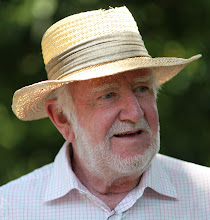
Last night I gave a talk to the SA Academy of Engineering on "The opportunities for low-carbon energy technology for power generation." This was to present preliminary findings on some work an international team and I had been doing for the International Council of Academies of Engineering. Suppose you desired a lower carbon world. What could be done to keep the lights on and not see the cost of doing so spiral out of control?
We concluded that, by 2050, it was probably technically feasible to double our use of electricity and yet emit a third less carbon than we currently do. It would mean taking about half our coal-fired power plants out of service, and replacing them by hydropower, nuclear power and some renewable energy.
At question time there were some sensible questions. Gratifyingly, my bit of kite flying was not completely shot down in flames.
And then my heart sank. A student started to spout the usual collection of green beliefs. It didn't matter that I had carefully analysed the possibilities, that I had presented a wide range of facts which taken in their totality indicated that it should be possible to reduce carbon emissions without running out of either energy or money.
I didn't realize, he claimed, what a disaster the world was facing; how it was not enough to start talking about 2050, action was needed now if the world was to survive. We were facing increasing climate disasters that might lead to starvation at the very least. The Government of Australia and the IPCC had spoken! I should have listened. Instead, what I was proposing was too little, too late.
It was question time, so I hoped he would forgive me if I forgave him for not asking a question, but making a series of statements. However, it meant I should be allowed to ask him a question. If things were so desperate, why was it that the world's leaders had failed to reach a decision at Copenhagen four years ago; failed again at Cancun a year later; and decided last year in Durban to wait until 2015 before deciding on actions to be followed from 2020 onwards? Were the world's leaders wrong? He spluttered something about the world's leaders being nothing but a collection of politicians, which seemed to me a lame response.
But still, the incident rankled. For once, I had tried to make a positive contribution to what some see as the world's greatest problem. I don't see climate change that way - I think there are far more present dangers, here and now - but I needed to get to grips with the problem, such as it was. And here was a True Believer, saying in effect that I had failed miserably, and lecturing me and the hundred or so other members of the audience about his beliefs, his fears, his questionable view of the world.
There comes a time when being green seems to mean that you no longer have to listen to any other point of view - shout loudly enough, and the conversation will be one way, your way. Debate promptly dies, and our world is the poorer.